
Capitalism works too well — and that’s the problem
Capitalism is brilliant and destructive in equal measure. It’s the most successful economic system humanity has ever created — unrivalled in its ability to generate wealth and technological progress. That’s why it dominates worldwide: it works.
But success comes with a fatal weakness. Capitalism’s growth imperative collides head-on with planetary limits. It consumes resources, destabilises the climate, and makes sustainability impossible without systemic collapse.
In a wicked twist of fate, capitalism’s greatest strength is the very thing that guarantees its collapse. To get to the heart of the argument, we need to unpack what makes capitalism such a successful system and why this strength means it’s eating itself alive.
Capitalism’s greatest strength
Capitalism’s strength lies in its adaptability. Markets are constantly evolving and mutating due to innovation. As Joseph Schumpeter famously wrote in Capitalism, Socialism and Democracy, capitalism:
“incessantly revolutionises the economic structure from within, incessantly destroying the old one, incessantly creating a new one. This process of creative destruction is an essential fact about capitalism.”
This process of ‘creative destruction’ is a critical characteristic of capitalism that makes it so successful. Markets evolve, industries rise and fall, and innovation never stops. No one manages this process — it happens spontaneously, driven by billions of self-interested decisions.
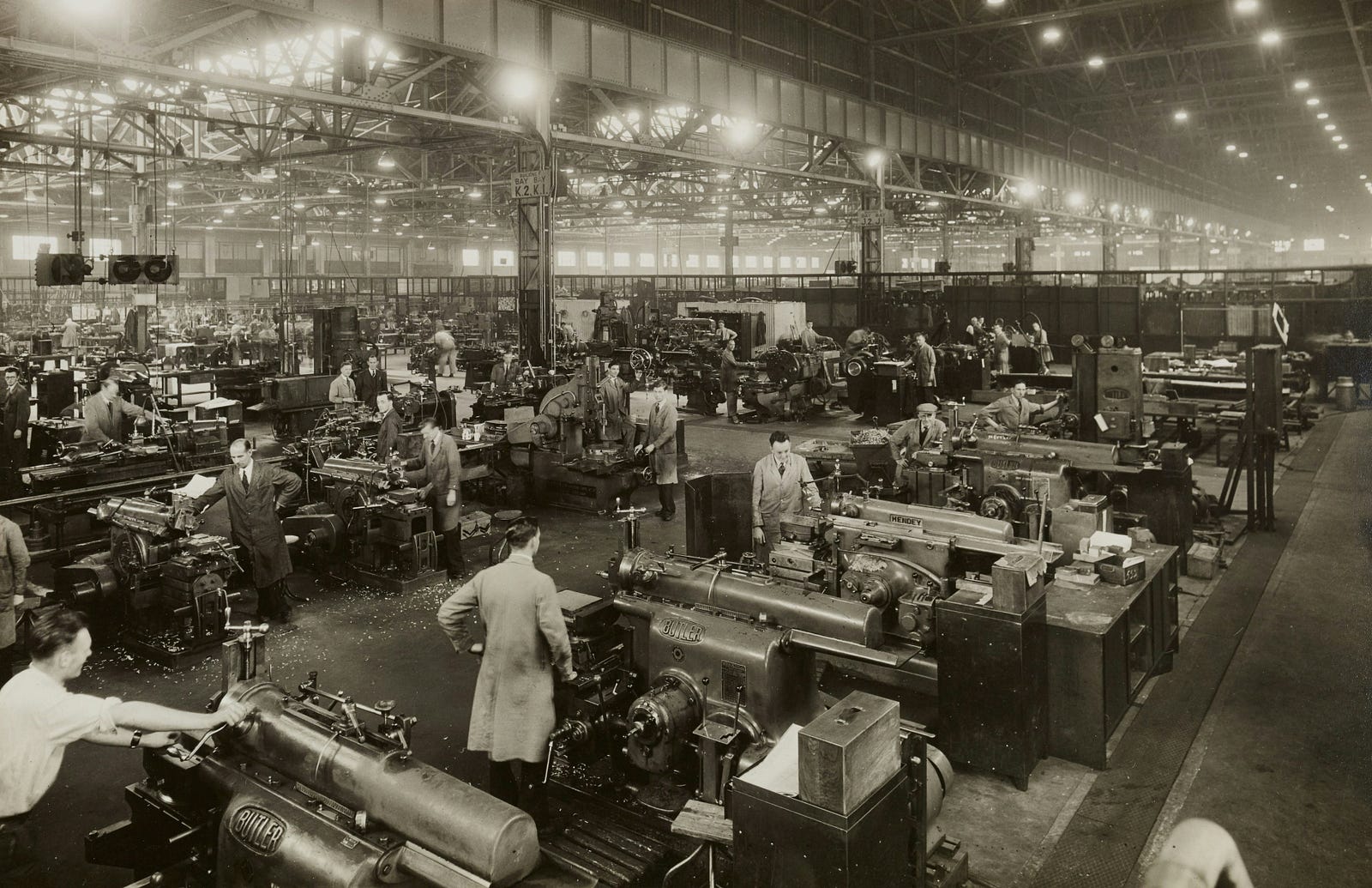
The result is a self-organising system of extraordinary resilience. Companies that fail to innovate are swept away by what Schumpeter describes as the “perennial gale of creative destruction”. Those that adapt survive, ensuring the system as a whole continues to evolve.

That adaptability is a superpower and is why capitalism outperforms centrally planned economies. It’s fast, decentralised, and ruthlessly efficient at reallocating resources. And the evidence of its success is undeniable: people today live longer, are better nourished, are more educated, and enjoy higher living standards than at any point in history.
So, what’s the problem?
The rules of the game
Cheerleaders for capitalism will argue, “It’s just like evolution. It adapts, it self-corrects, it rewards efficiency.” Kind of like an ecosystem. And that’s true, up to a point.
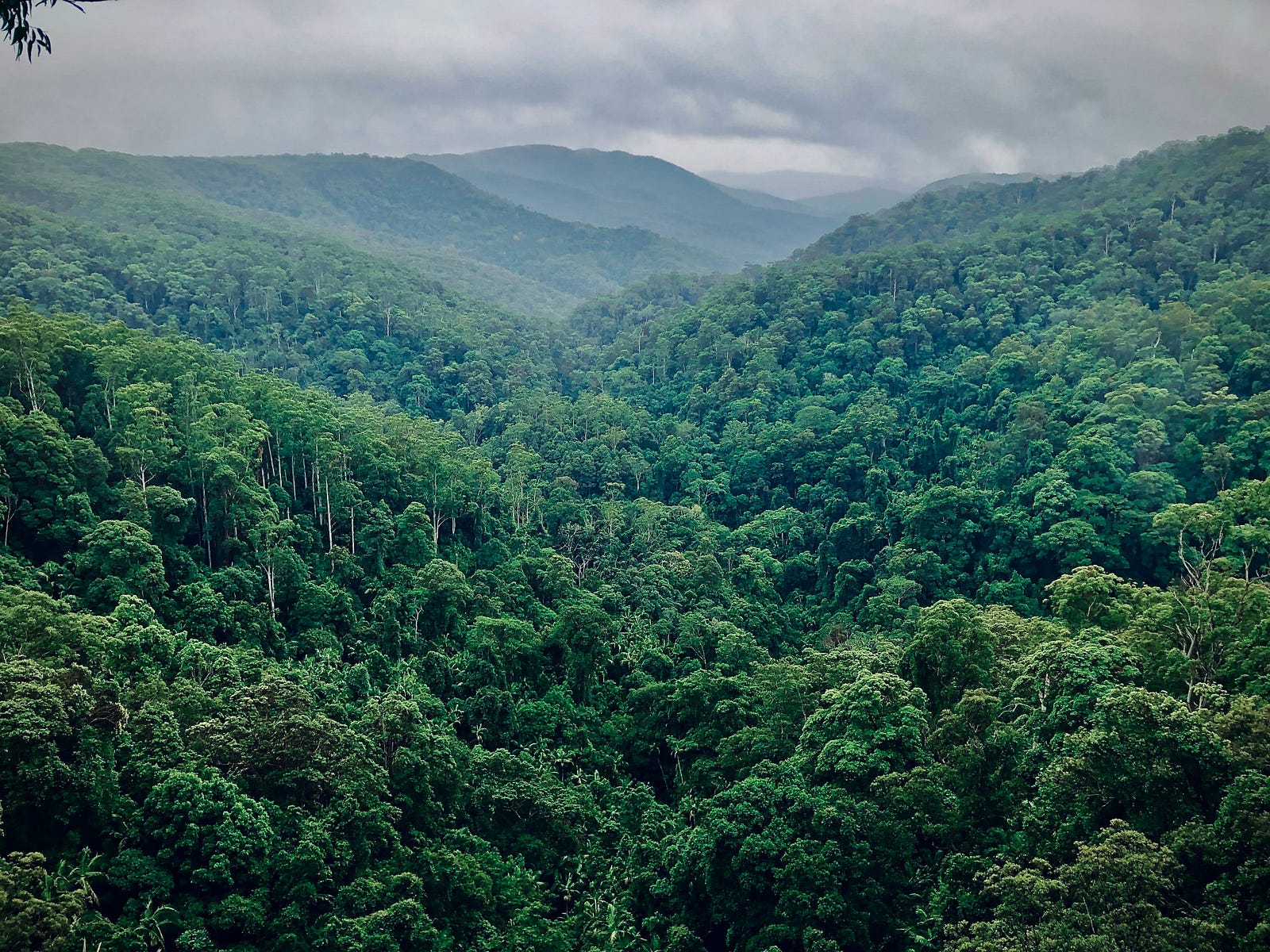
But there’s a crucial difference. In nature, the ‘rules’ — energy balance, symbiosis, biodiversity — serve a critical purpose, to ensure that life as a whole is sustained. A forest self-regulates in a way that benefits all life within the system.
Capitalism also has rules — but they don’t serve balance. The economy’s organising principles are economic growth, profit, and competition. The purpose is the never-ending expansion of the economic system. Capitalism also claims to self-regulate in a way that benefits all individuals in the system — by delivering meritocratic outcomes
Every company must grow to survive. Every government must increase GDP. Every individual is told that consuming more brings happiness. On paper, this seems virtuous: more wealth means higher incomes, which allows more people to consume more, which improves wellbeing.
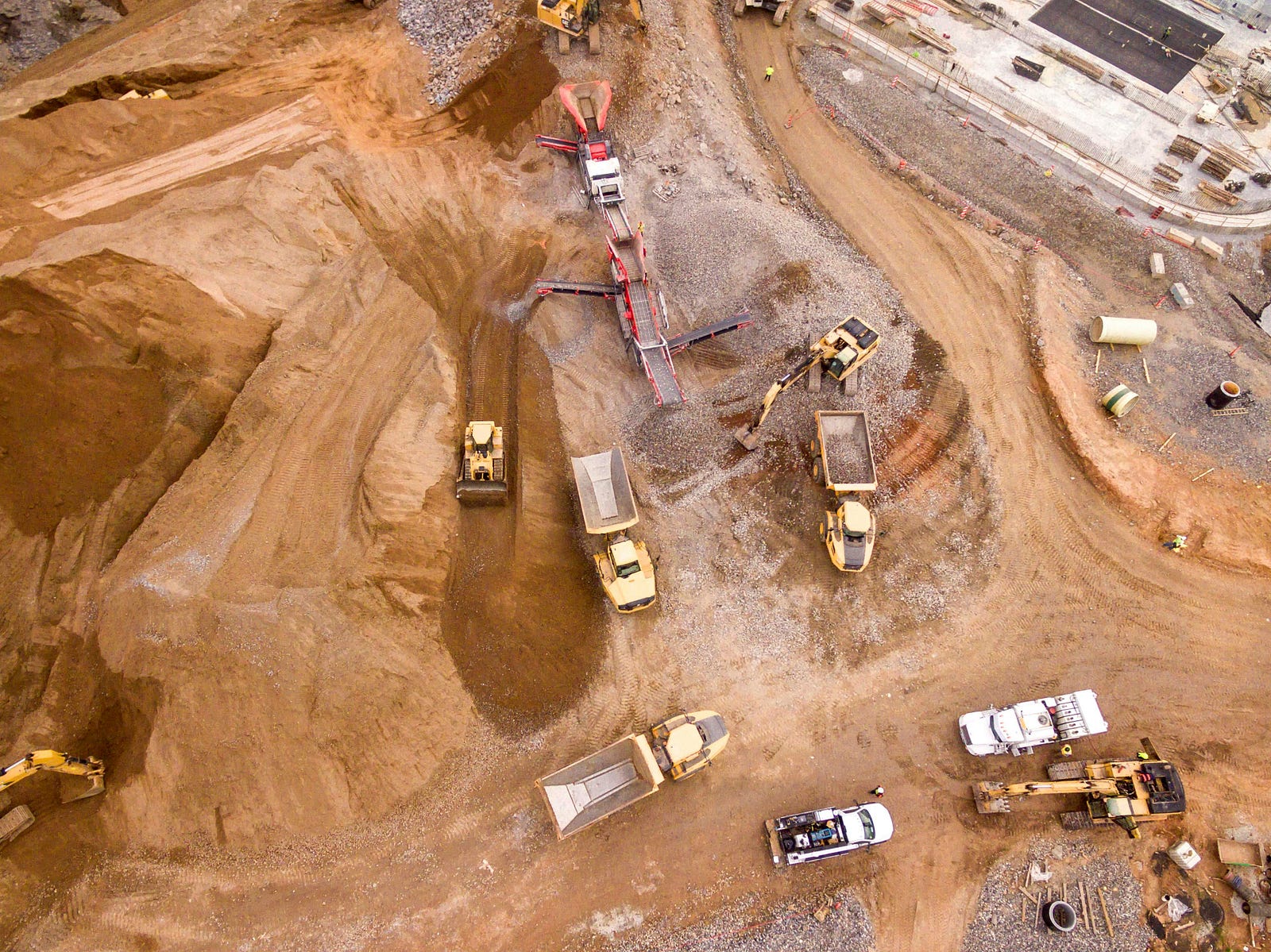
The reality is very different. The endless pursuit of ‘more’ is the heartbeat of capitalism. But the goal isn’t to meet human needs; it’s to maximise output, consumption, and wealth creation. On an individual level, success is determined by having more money and stuff than everyone else.
Capitalism’s greatest strength may well be that it mirrors ecosystems in its ability to spontaneously self-regulate, but that’s where the resemblances end:
- Nature’s adaptive systems reinforce balance and survival of the whole ecosystem.
- Capitalism’s adaptive system reinforces imbalance, exploitation, and the success of a minority at the expense of the majority.
It’s like giving evolution a cheat code where only short-term winners matter, even if the long-term ecosystem dies.
The ultimate weakness
Here we get to capitalism’s ultimate weakness. It works too well. Its genius lies in creating a mechanism that drives ever-increasing production and consumption. But the economy doesn’t exist in a vacuum. Increasing production requires increasing inputs of energy and resources. The more we produce, the more we extract from the natural world.
More people consuming more stuff leads to an increase in our collective ‘ecological footprint’ — the rate we consume resources and generate waste compared to how fast nature can absorb wastes and replenish resources.
The Global Footprint Network uses the ecological footprint to measure how quickly humanity consumes resources compared to how quickly nature can replenish them. Since 1971, we’ve been in a state of ecological overshoot — meaning our ecological footprint is greater than what one planet Earth can sustain.
Today, we need 1.75 Earths to maintain our current lifestyles.

Overshoot has accelerated over time as our collective ecological footprint has increased. The outcome is ecological destruction.
Overshoot has led to the climate crisis, triggered a mass extinction event, and pushed ecosystems like the Amazon rainforest to the brink of collapse. We’ve become the first species in history to trigger the destruction of its own life-support system.
This means capitalism is fundamentally unsustainable because to sustain itself, it must achieve economic growth, but growth can’t be sustained without undermining the natural systems that make life possible.
Escaping overshoot
So how do we escape overshoot? There are two options.
We can continue to pursue economic growth, which will exacerbate overshoot, leading to a situation where we escape by disaster. Very much an undesired option.
Or, we make adaptations and design our way out. That sounds far more promising, particularly when adaptation is capitalism’s greatest strength.
But this is where capitalism’s greatest strength becomes a fatal weakness. Any adaptation only works if it supports capitalism’s core rules — more production, more consumption, more growth.
The ‘IPAT’ equation reveals the problem:
I = A x P x T
(Environmental Impact = Population × Affluence × Technology (per unit of production))
With population still growing and affluence tied to ever-rising consumption, the only lever left to pull to reduce our environmental impact (I) is by improving T — making production more efficient.
Many companies pursue dematerialisation: creating the same products with fewer materials. But efficiencies can trigger a rebound effect. When a product becomes cheaper to produce, companies sell more of it. Consumers save money when purchasing the product and use that income to buy other goods. Efficiency doesn’t reduce impact; it amplifies it.
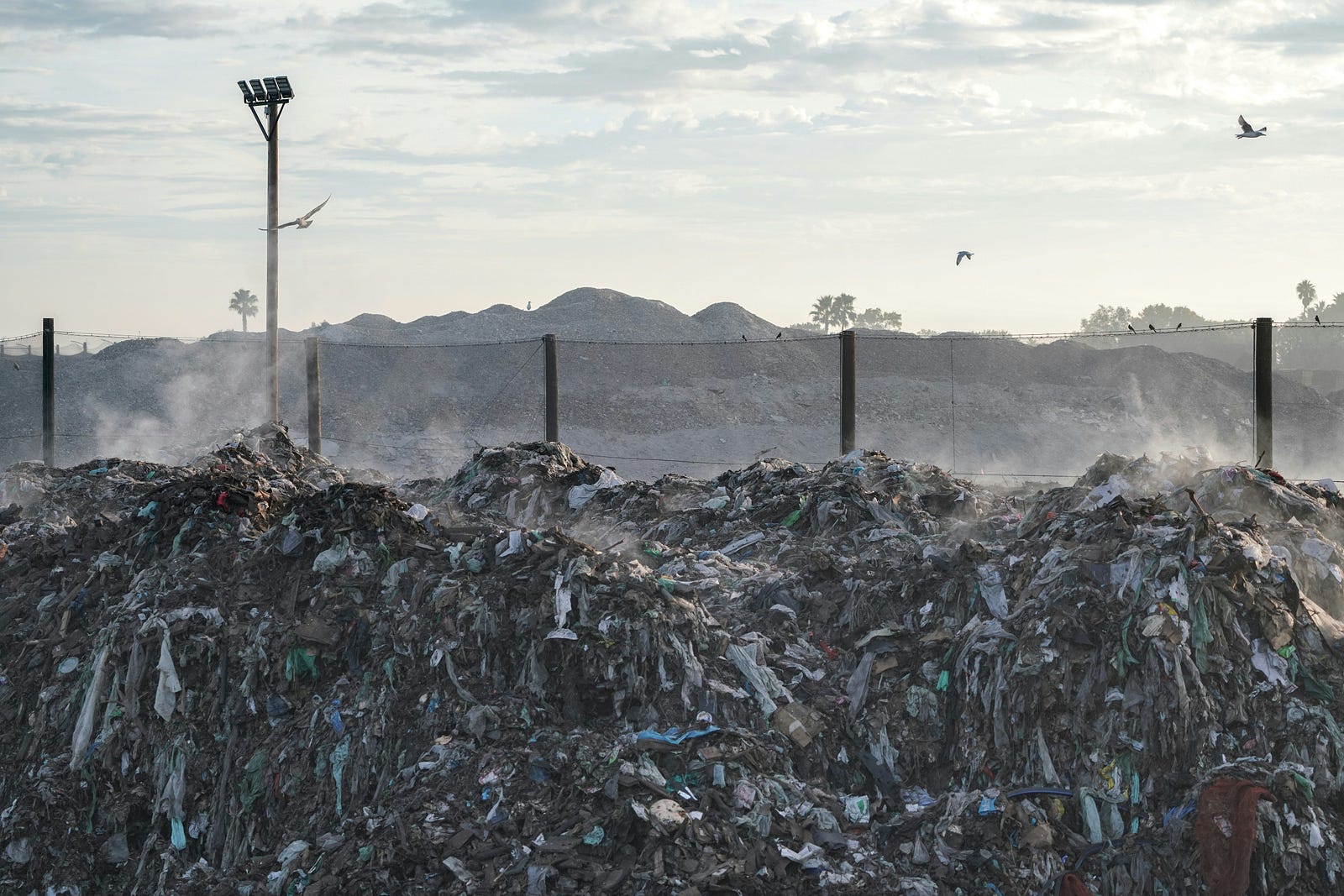
In Enough is Enough, Rob Dietz and Dan O’Neill show that between 1980 and 2007, the material intensity of the global economy fell by 33%. Yet world GDP grew by 141%, meaning total resource use still rose by 61%.
Fundamentally, the problem stems from an economy designed to grow and a society that serves that goal.
Questioning the unquestionable
This is why overshoot continues getting worse: the rules of the game are non-negotiable. Capitalism can only adapt in the service of growth. Even when it becomes more efficient or “green,” it remains trapped in the logic of expansion.
That’s why overshoot is so controversial. It suggests that never-ending growth can’t be sustained. Worse, it’s impossible to escape the conclusion that the only way to exit overshoot by design is to question capitalism’s rules.
Here is where we get to the crux of why that great strength is such a debilitating weakness.
Who dares question a system that appears so successful?
Politically, it’s impossible. Growth is treated as sacred; it’s what the economy does. The idea that it could have any other purpose is unthinkable. Every policy, every business model, every pension fund depends on it. Even the most progressive governments fear the consequences if growth stops.
The result is a set of environmental policies that are totally inadequate; meanwhile, the causes of overshoot go unquestioned because we can’t reduce consumption without threatening the stability of the economy.
Overshoot means we don’t have a choice, though; if we refuse, the planet will do it for us.
The promise of degrowth
The inevitability that a growth economy will result in overshooting by disaster is the central argument made by post-growth thinkers as to why growth is an unsustainable development path.
Post-growth thinkers argue sustainability requires shrinking the economy while maintaining well-being — a concept known as degrowth. It means producing and consuming less, redistributing wealth, and redefining prosperity beyond GDP.
Politically, degrowth is poison. It sounds like a sacrifice — fewer goods, fewer jobs, lower living standards. No politician could run a campaign on “Vote for me, become poorer.” They would be torn to shreds.

Even if advocates sold degrowth as a means to increase quality of life through less stress and more community, the story is unlikely to trigger widespread support. We’ve been hardwired to equate prosperity with consumption.
So the system endures, fuelled by its own logic, hurtling toward the limits of a finite planet.
Collapse is inevitable
Economic growth is unsustainable by design. Every unit of output requires energy and materials — and no amount of efficiency can fully decouple growth from resource use.
Capitalism cannot survive without growth, and growth cannot continue without destroying the biosphere. The two are inseparable.
That means collapse isn’t a possibility — it’s an inevitability. The only unknown is when it happens and what comes after.
One way or another, nature will enforce balance. Whether through resource depletion, climate breakdown, or social upheaval, the system will correct itself. Humanity’s challenge will be to survive that correction — and rebuild something sustainable in its wake.
In hindsight, capitalism’s greatest strength — its adaptability, its hunger, its drive to expand — will also be viewed as its mortal weakness. The system that conquered the world will ultimately destroy the conditions that made it possible.
Schumpeter might call it creative destruction on a civilisational scale.
We are living through the calm before the storm — a fleeting moment where the illusion of stability still holds. But the cracks are widening. When the system finally breaks, it won’t just mark the end of capitalism as we know it; it will mark the end of an era where growth was mistaken for progress. What comes next will decide whether collapse becomes our extinction — or our evolution.