

The system that made us rich can no longer sustain itself
Whether it’s going faster, building higher, or living longer, modern society is built on the assumption that more is always better than less. For over two centuries, that belief has fed a culture of progress that has revolutionised living standards. Deadly diseases have been eradicated, and life has become much longer, safer, and more comfortable. But the culture of progress has a problem. It works too well.
Here’s the problem with how we conceive of social progress: achieving it relies on the continuous expansion of production and consumption. That leads to increasing demands on the environment. So while we are all enjoying the benefits of progress, it has created an environmental debt that must be repaid.
Progress has become so problematic that it’s an existential threat to humanity. To understand why, we need to understand the problem that progress aimed to solve.
From poverty to luxury
Let’s rewind to London in 1800. England was in the grip of the Industrial Revolution, and London was the richest city in the world. Yet, most people lived brutal lives of hardship and struggle.
If you survived the first five years of life (about 25% didn’t), you likely started working at age 7 or 8 to help a family struggling to meet basic needs. From then on, life revolved around a 10 to 12-hour working day, 6 days a week.
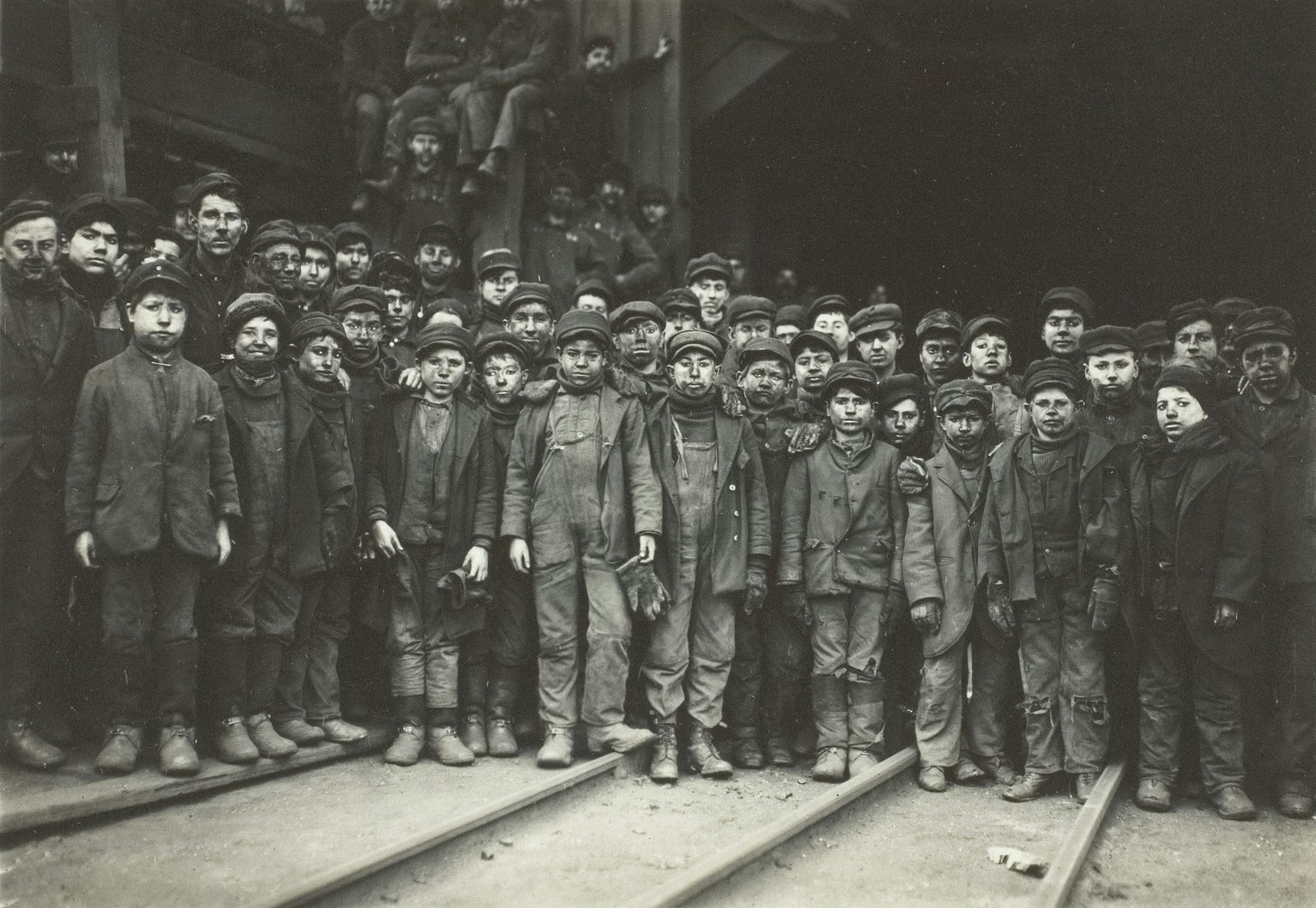
After work, people returned to squalid slums plagued by tuberculosis, typhus, cholera, and smallpox. Often sharing single rooms with 6–10 others, slums had no running water, no sewage systems, no toilets.
As if that weren’t enough, many Londoners battled chronic malnutrition, with most wages going to a meagre bread-based diet.
And that was the drumbeat of, until death around 60.
Fast forward to today, and after 200 years of progress, a child born in London faces less than a 1% chance of dying before age five; globally, it’s under 4%. Child labour is illegal, and education is free up to age 18.
Adults work 7 to 8-hour days, 5 days a week. Families live in homes equipped with central heating systems, hot water and plumbing. White goods such as washing machines and refrigerators are universal.
Food makes up a small proportion of household budgets. Now we’re faced with an obesity epidemic, with many going on selective diets in an effort to maintain a healthy weight.
Universal healthcare and vaccines now make deadly diseases rare. While nearly 90% took a holiday last year.

People retire at 67 with a state pension and an average life expectancy of 81.
This isn’t some rare aspirational living standard; it’s a basic expectation. And it’s a standard of living enjoyed by many (but not all) people around the world. Globally, life in high-income nations is long, stable (relatively speaking), with plenty of leisure time.
The driving force of progress
This was the vision; it’s what the culture of progress aimed to achieve. To improve well-being, to make life more stable and enjoyable.
The culture of progress began with scientific discoveries in the seventeenth century that created a new understanding of the world. Many educated Europeans felt a new sense of opportunity and became gripped by the idea that anything was possible. Fear of change was replaced by a belief that what was unknown was merely the undiscovered.
The Enlightenment, as it came to be known, was driven by the belief that nothing was beyond rational improvement. Underpinning Enlightenment thinking was a deep commitment to the idea of progress. This commitment was a product of our increasing ability to shape the world around us to our own benefit.
Before the Industrial Revolution, we didn’t have the technological or scientific understanding to sustain increases in food production. Defective science and technology would lead to famine and death.
The Industrial Revolution, propelled by science and technology, changed the game by overcoming these deficiencies. Crucially, it made sustained increases in production and economic growth possible.
England may have led the way, but as the standard of living rose in countries that underwent industrialisation, societies became aware of the possibilities of economic growth to enhance living standards.
The social cost
Economic growth is vital to progress because it increases incomes. More income means people can spend more money on consumable goods — and because it’s assumed our well-being is wrapped up in our ability to consume more, the higher our incomes, the happier it’s assumed we all are.
And so the foundation of social progress is two-fold: achieve economic growth, which allows individuals to become richer.
This model only truly took hold after the Second World War. Advances in technology, science, and energy drove massive increases in industrial efficiency. Cheap energy and improved agricultural methods led to unprecedented increases in manufacturing, transport, and food production.
The combination fuelled a global economic boom. In the US and other developed economies, modern homes, TVs, white goods, and cars became widely accessible. Holidays became common. Within a single generation, living standards rose visibly.

This was the golden era of capitalism, the culmination of what Enlightenment thinkers could only dream of in the eighteenth century.
A society built on the promise that each generation would be better off than the last.
But in recent decades, incomes have stagnated while prices — particularly housing — have continued to rise. For many, buying a home has become increasingly out of reach. Those who bought in the post-war boom benefited from a system that rewarded ownership and timing. That opportunity is no longer widely available.
We may well enjoy living standards that are incomprehensible to most of human history, but our benchmark for measuring success is not to compare ourselves to a peasant in 1500, but rather to our parents and peers.
Post Second World War, the system delivered clear, visible improvements in status and security. Today, getting by has become an achievement, leading to growing social tension, frustration, resentment, and political polarisation.
Increasing social tension is one of the key problems with progress: each generation must become richer than the one before it. And this is one of the reasons why economic growth isn’t just desirable; it’s a requirement for maintaining a cohesive, functioning, and healthy society.
The environmental cost
The problem with progress, though, is that the high living standards come with an environmental cost. As living standards rise, incomes increase, enabling people to consume more. This means that the higher the standard of living, the more resource and energy-intensive it is to maintain.
As more people consume more stuff, our collective ‘ecological footprint’ increases. This is the rate at which we consume resources and generate waste compared to how quickly nature can absorb waste and replenish resources.

The Global Footprint Network uses the ecological footprint to measure how quickly humanity consumes resources compared to how quickly nature can replenish them. Since 1971, we’ve been in a state of ecological overshoot — meaning our ecological footprint is greater than what one planet Earth can sustain.
Today, we need 1.75 Earths to maintain our current lifestyles. The outcome of overshoot is ecological destruction.
Overshoot has led to the climate crisis, triggered a mass extinction event, and pushed ecosystems like the Amazon rainforest to the brink of collapse. We’ve become the first species in history to trigger the destruction of its own life-support system.
But with nearly 50% of people still living on less than $5.50 a day, the culture of progress has a long way to go before it has finished its work and achieves a high standard of living for everyone.
People living in poverty have every right to aspire to improve their standard of living. But increasing living standards for over 4 billion people can only be achieved through more economic growth. This requires rapid increases in energy and resource use, accelerating overshoot and increasing our environmental debt.
Increasing overshoot means higher emissions. It means pushing every environmental indicator in the wrong direction at a time when Earth’s life support systems are already at breaking point.
Paying back the debt
Put bluntly, further progress will just accelerate the point at which overshoot triggers irreversible environmental changes.
In other words, capitalism and the culture of progress are unsustainable by design. We need a radically different approach to development, one that reduces overshoot.
That goal forms the basis of post-growth thinking.
Escaping overshoot and achieving sustainability involves shrinking the economy while maintaining well-being — a concept known as degrowth. It means producing and consuming less, redistributing wealth, and redefining social progress and prosperity beyond GDP.
That doesn’t mean we give up on progress, but it does mean we need to find radically new ways to achieve human needs and find new forms of meaning that don’t revolve around decadent excess and consumerism.
The challenge is that the link between individual behaviour, economic growth, and ecological debt is not visible. We’re not directly experiencing any negative consequences of economic growth and the culture of progress. If anything, calls to move to a post-growth economy are a threat to our current way of life.
And that is arguably the biggest barrier progress creates.
Now that consumerism has become a basic expectation, the idea that people will have to give it up will feel like a sacrifice. One that is disproportionate to the problem being faced.
It’s politically, socially, and economically impossible to reject the current idea of progress, and that is the problem. Overshoot means we don’t have a choice. But progress will be maintained, celebrated, and (ideally) accelerated — until environmental limits pull the brakes on growth.
Progress has always been well-intentioned; it has always been about making life better. But along the way, we’ve become blinded. Consumed by the idea of more, with little regard for limits.
No one ever stopped to think about what comes next, and that failure of foresight means we are now staring down the barrel of overshoot. We have inadvertently created a trap of our own making — one that compels us to behave in ways that place more pressure on the trigger.