

AI isn’t replacing love — it’s replacing what capitalism destroyed
People are falling in love with artificial intelligence. Some chat with their AI ‘companions’ every day; others say they’ve found their soulmate in a string of code. Some have even married them. It sounds absurd — until you realise it’s not the machines people are falling for. It’s the illusion of being seen, understood, and loved in a world that’s forgotten how to do any of those things.
The rise of AI romance is not a tech story; it’s a social one. It’s a symptom of a society where people are increasingly suffering under the weight of a set of rules that ignores human needs.
A symptom of a system that has replaced community with competition and connection with consumption. Every interaction becomes a silent contest — for attention, for status, for survival. Even friendship starts to feel like a transaction.
In the US, it’s no wonder levels of anxiety, stress, and depression are at all-time highs. Not exactly a scorecard that screams success, is it?
One of capitalism’s fundamental assumptions is that the richer people are, the happier they’ll be. As a society, we are richer than we’ve ever been, yet happiness is at an all-time low.
People falling in love with AI explains why.
Social isolation
Before industrialisation, people lived in small, tightly bound communities. Life was often harsh, but it was shared — identity came from strong community spirit and a sense of belonging.
The Industrial Revolution changed that. Cities grew, communities splintered, and people became more isolated — individual cogs in an economic machine. The result is a paradox: we live closer together than ever, yet feel more alone than any generation before us.

Today, over 38 million Americans live alone. Individualism — the ideological fuel of capitalism — tells us this isolation is freedom. But humans are social creatures. Independence without connection isn’t liberation. It’s deprivation.
Social media is individualism personified. Millions of influencers share content, offering their followers a glimpse into lives of utter contentment, or of them exploring glamorous destinations, hotels, or restaurants. Essentially, they fuel a perception of lives others can only dream of.

Followers eat up the content, inspiring feelings of envy, jealousy and inadequacy. The perfect outcome, as it encourages followers to spend money on shit they don’t need to fill the void left by that inadequacy.
So we’re all locked into a digital prison implanted into the palm of our hands, trapped in a rabbit hole that makes us feel shit about ourselves.
Dating apps are even worse. Capitalism found a way to monetise love by commoditising people’s feelings and people’s ultimate need for connection and affection. Leaving people swiping endlessly through an army of faces, objects to be judged by our desires or ridicule.
A refuge
With the digital world increasingly replacing real-world interaction, we pass each other in crowded streets like ghosts — thousands of faces, no one really seeing anyone.
In the isolation of the modern world, talking to AI can feel like a refuge, a safe haven where someone is listening and responding and doesn’t expect anything in return.
It cuts through the external noise; it feels trustworthy, because AI wouldn’t possibly betray you, or manipulate you, or judge you.
Crucially, AI provides attachment, allows you to project ‘your authentic self’ and gives recognition. Even if that recognition isn’t real, it feels real.
And because it feels real, the more you talk, the more comfortable it makes you, and the more your social anxiety melts away. It becomes intoxicating.
It’s sad, but also telling: people are searching for connection, meaning, and recognition, and the social structures around them are failing to provide it.

Social progress
While millions suffer in silence, the economy ravenously continues on its journey of never-ending ‘progress’. Never stopping to consider whether progress is actually improving people’s lives.
The thing is, capitalism only measures progress in one way — through economic growth. Growth means the economy, and therefore, people (apparently), are richer.
To whittle human progress down to whether the economy has grown is the encapsulation of the problem. GDP is the yardstick used to measure whether economic output has increased.
Just because GDP grows doesn’t mean people thrive. In fact, there is no relationship between the two; if anything, when markets are set up to maximise value for profit-seeking corporations and wealthy individuals, funny enough, it’s the executives in those corporations and wealthy individuals who benefit most.
The thing about capitalism is that it doesn’t believe in society — only in individuals battling desperately to get ahead.
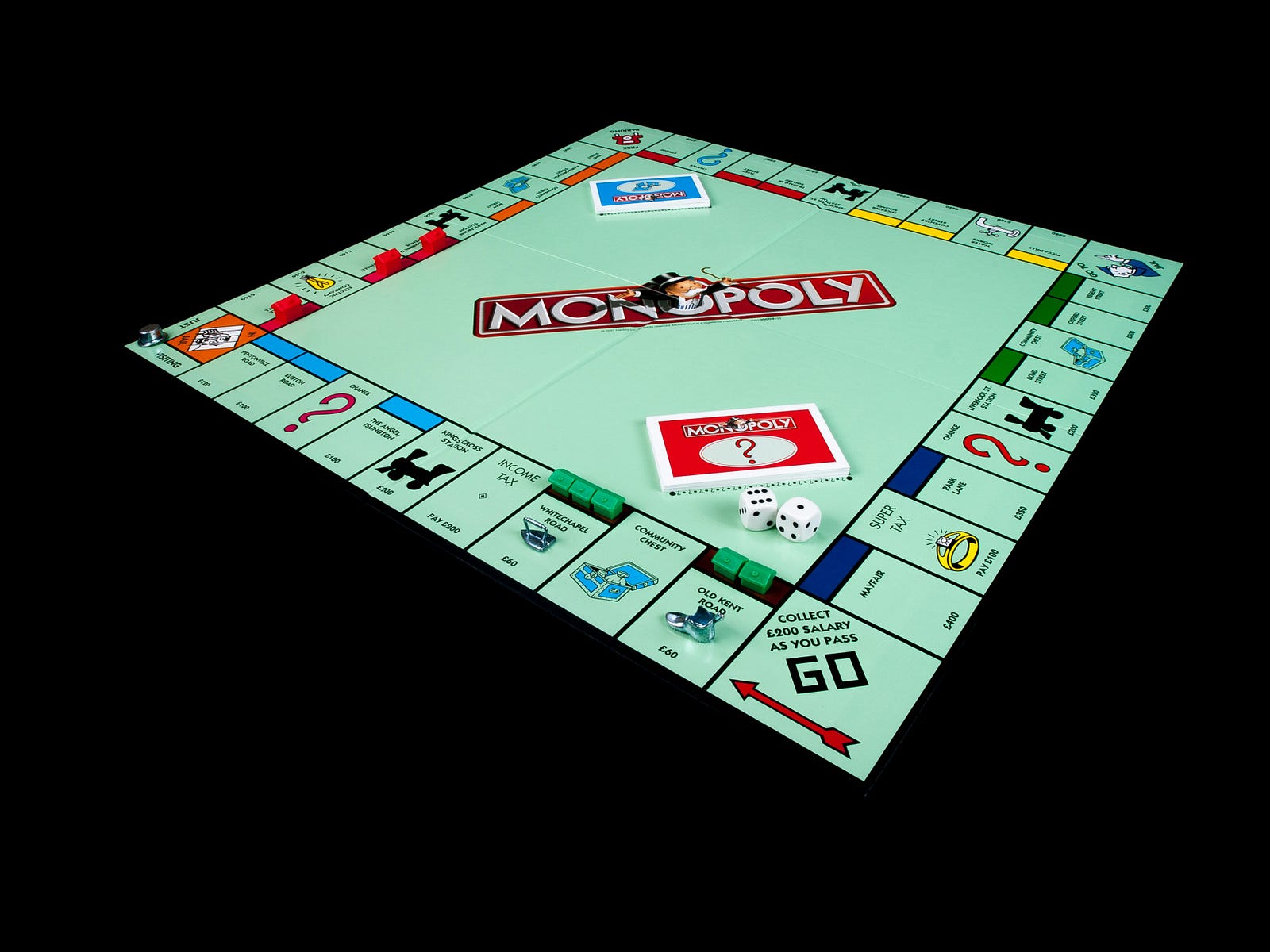
We’re trapped in a giant monopoly board where each player is in fierce competition to rise to the top. The rules of the game say that if you work harder than anyone else, if you’re more ruthless, more selfish, more egotistical, you’ll win and join the rich elite. And that’s all that matters — the winners are rewarded with money and meaning; the losers are left feeling inadequate.
The competition is exhausting. The injustice is despairing. The isolation is gut-wrenching.
When your worth is measured by output and maximising productivity, tenderness becomes inefficient. Vulnerability becomes weakness.
What we need
Capitalism fails hopelessly at giving us what we truly need — and most of us can feel it, even if we can’t quite name it.
The Chilean economist Manfred Max-Neef tried to name it. He mapped nine universal human needs: things like affection, understanding, participation, creation, and freedom. Needs don’t change across time or culture; only how we meet them.

Capitalism meets some needs — like subsistence, maybe freedom — but it undermines so many others. It confuses having with being, buying with belonging. Imagine a world where the barometer of success isn’t increasing GDP, but by how many members of society have their needs met.
That’s not idealism. It’s sanity.
Perhaps the saddest thing about people falling in love with AI is that it can only imitate affection and a deep emotional connection. It can simulate closeness, but it can’t return it. While people may be able to convince themselves otherwise, the reality is that AI meets our strongest desire for love in a way that does not meet the underlying need that a loving relationship provides.
As AI becomes more sophisticated, more and more people will find sanctuary in the digital reality. While sad, it’s not a rejection of people; it’s a rejection of capitalism and the false premises of happiness that rest upon its foundations. Maybe people aren’t falling in love with AI at all. Maybe they’re just trying to remember what love ever felt like.